Many brands ask: is eco-friendly packaging a short-term fashion or a long-term trend? Lumepacking makes custom paper packaging for European and US e-commerce brands. This article answers the question with two kinds of data: consumer research and EU regulation.
Eco-friendly packaging trend: key figures
- 51%: in McKinsey's 2025 survey, 51% of consumers said the environmental impact of packaging is "very important" or "extremely important" — the same as in 2020 (51%) and close to 2023 (52%).
- Top 3: paper and glass ranked in the top 3 "most environmentally friendly materials" in consumers' minds in all 11 countries; plastic film ranked last in 10 countries.
- About 40%–85%: the share of people willing to pay more for eco-friendly packaging, from about 40% in Japan to about 85% in India.
- 40%: the EU PPWR limits empty space in e-commerce packaging to 40%, applicable from 12 August 2026.
Consumer attitudes to eco-friendly packaging: concern is flat, but it is not going away
McKinsey's 2025 global packaging survey covered Brazil, China, France, Germany, India, Italy, Japan, Mexico, Sweden, the UK and the US, with 11,136 respondents.
The survey shows that consumer concern about packaging sustainability has barely changed between 2020 and 2025. Compared with price and quality, sustainability has dropped in the ranking. In other words, being eco-friendly is a plus, but it is rarely the buyer's first consideration.
The people willing to pay more are concentrated among Gen Z, millennials and high earners. In Germany, for example, 8% of people are willing to pay "a lot more", and among high-income millennials the figure is 25%.
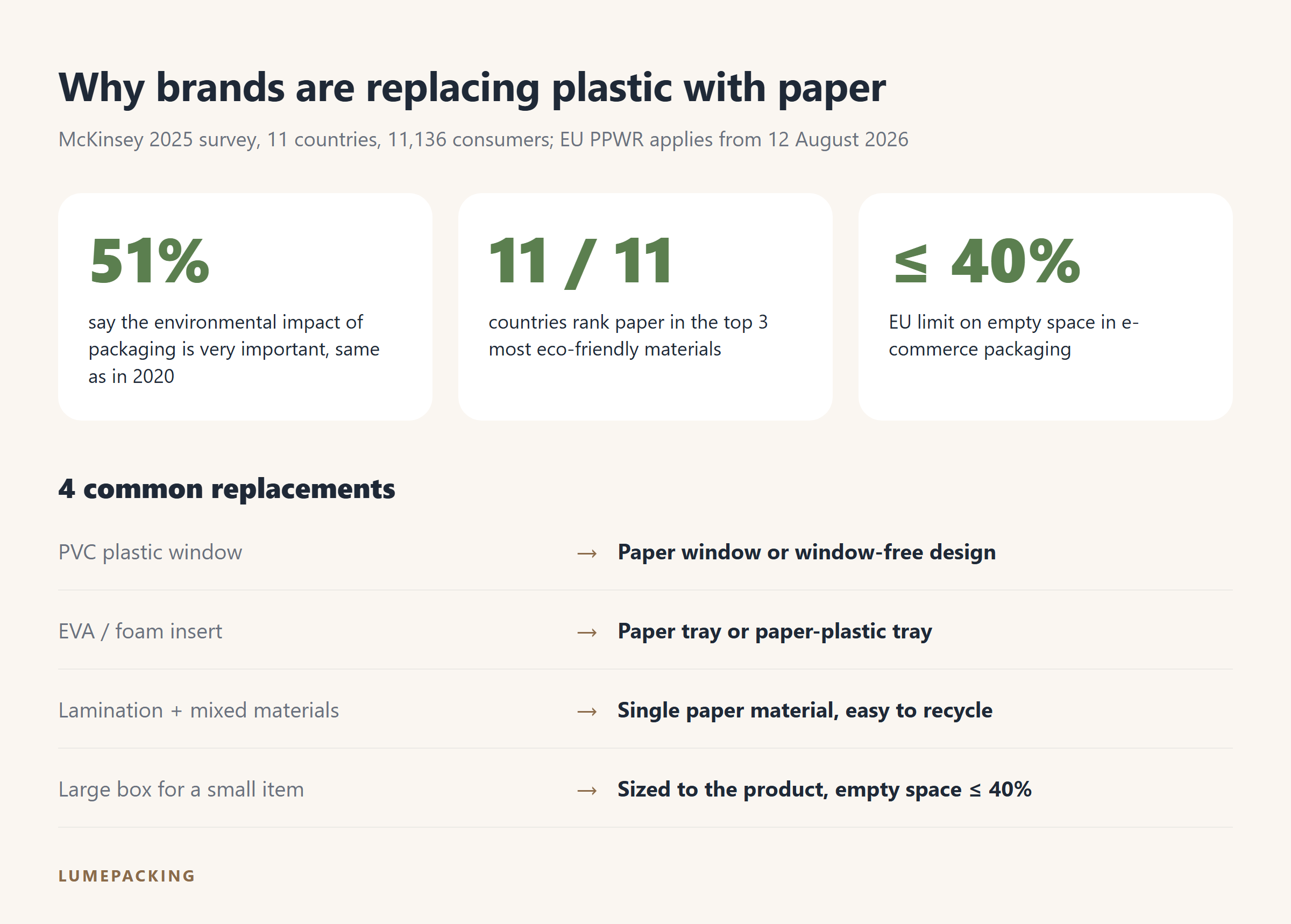 McKinsey 2025 survey data and 4 ways to replace plastic with paper packaging
EU PPWR: eco-friendly packaging moves from "optional" to "required"
- Empty space: e-commerce packaging may not exceed 40% empty space.
- Materials: the intentional addition of PFAS to food-contact packaging is banned.
- Labels: harmonised sorting labels will be introduced in 2028.
- Recyclability: from 2030, packaging must meet recyclability requirements.
These requirements do not distinguish by origin or company size; they apply to all packaging placed on the EU market.
Who is driving eco-friendly packaging: brands and packaging makers
In McKinsey's survey, consumers in all 11 countries said brands and packaging producers should carry the main environmental responsibility, ahead of consumers themselves, retailers and governments.
This means buyers do not necessarily pay more for sustainability, but they expect brands to do it proactively.
How to make packaging greener without adding much cost
1. Remove plastic components
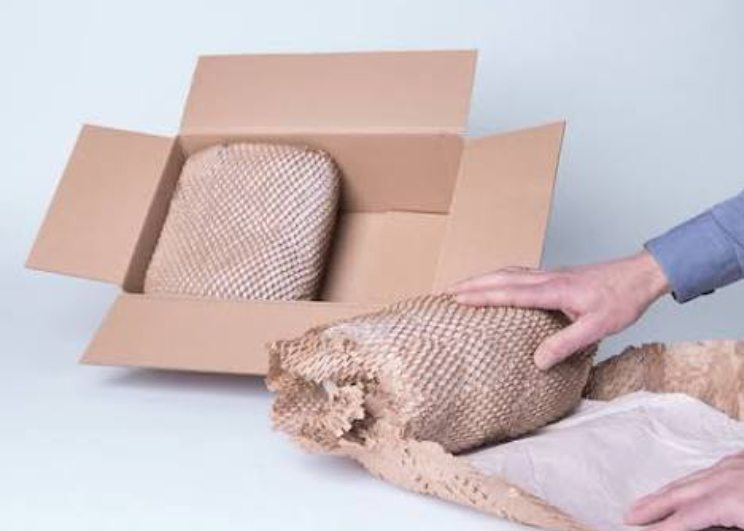
Replace PVC windows with a paper window or a window-free design, and replace EVA and foam with paper trays or paper-plastic trays.
2. Move to a single material
An all-paper structure is easier to recycle and better matches the PPWR recyclability requirements.
3. Size the box to the product
Less empty space meets the 40% limit and also lowers freight cost.
4. Use folding boxes instead of rigid boxes
They ship flat, reducing shipping volume and storage space.
How to get started
Send Lumepacking the size, material and sales market of your current packaging. We will check whether the empty space and materials meet the PPWR, and propose replacement options and samples.