FSC-certified paper and recycled paper are the two environmental options European and North American buyers ask about most often when requesting a quote, but they describe different things. Lumepacking produces FSC-certified packaging and also uses recycled paper. This guide explains the difference, the limits of each, and how to choose by product.
FSC-certified vs recycled paper: key differences
| FSC-certified paper | Recycled paper | |
|---|---|---|
| What it covers | The pulp source: whether the forest is responsibly managed, with a chain-of-custody record | The fibre source: how much recovered paper is in the sheet |
| Common labels | FSC 100%, FSC Mix, FSC Recycled | A recycled-content claim, or a standard such as GRS |
| Strength | Mostly virgin fibre, better strength and brightness | Shorter fibres, strength and brightness can be lower |
| Print result | More consistent colour | May show specks and slightly duller colour |
| Food contact | Food-grade board available | Needs care: confirm it meets food-contact requirements |
| Customer demand | Often required by European retailers | Required by brands focused on recycled content |
What is FSC-certified paper?
FSC (Forest Stewardship Council) certification shows that the pulp comes from responsibly managed forests and that every step from forest to factory is recorded, known as chain of custody. There are three labels: FSC 100% (all fibre from certified forests), FSC Mix (certified forests plus other controlled sources) and FSC Recycled (all recovered material). Printing the FSC logo on a pack requires approval first.
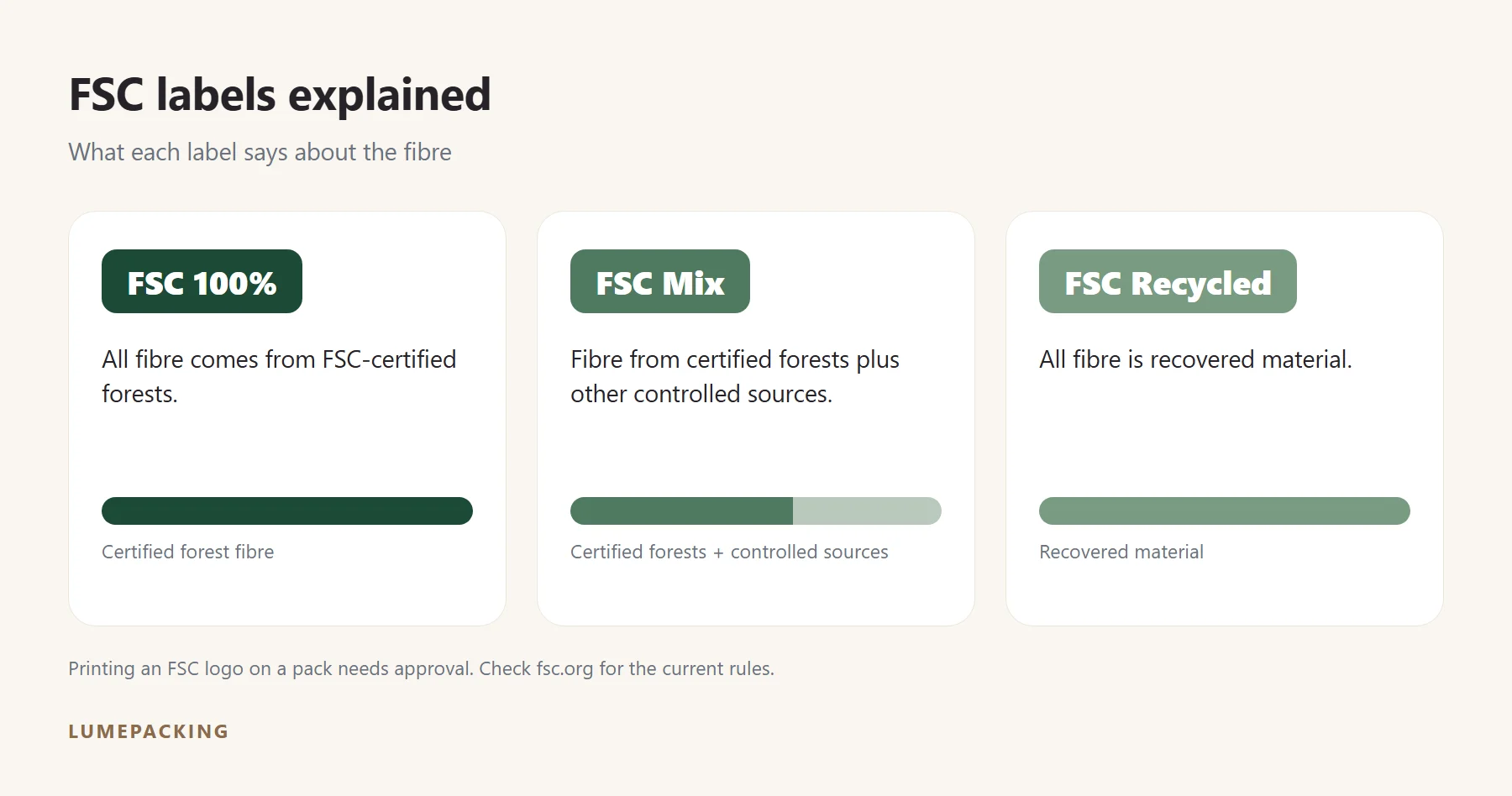
If a customer asks for FSC, state the label type at the quote stage and confirm whether the logo needs to be printed.
What is recycled paper?
Recycled paper contains a share of recovered fibre. Recycled fibres are shorter than virgin fibres, so strength and brightness are usually lower and the surface may show specks. Lumepacking holds GRS certification, which supports traceability and verification of recycled content; see About Us.
Recycled paper suits outer cartons and inserts with modest strength needs; test a sample first for any box face that needs fine print.
Can FSC and recycled paper be combined?
Yes. FSC Recycled meets both: all the fibre is recovered material and it carries FSC chain-of-custody certification. It suits packs that need an environmental claim and no food contact, such as shipping cartons and inserts.
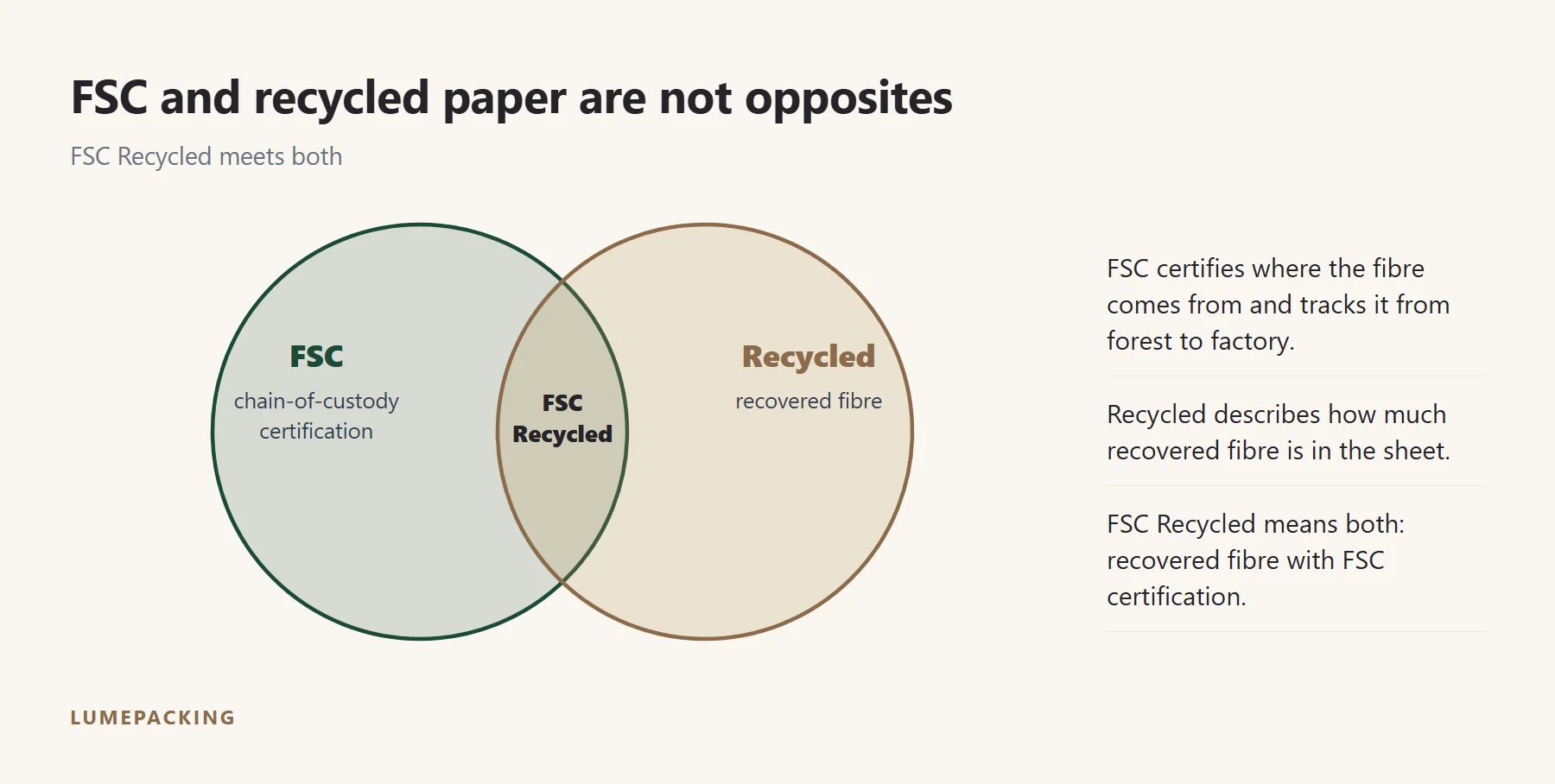
When you request a quote, writing "FSC Recycled" is clearer than writing "FSC" or "recycled" alone.
Can recycled paper be used for food-contact packaging?
Use care. Recovered paper can carry residues such as mineral oil from inks, so a pack that touches food must be confirmed against food-contact requirements. We have a case where we declined to quote ordinary paper because of food contact. For direct food contact, choose food-grade virgin-fibre board and ask for a test report.
Before making food packaging, confirm that the board meets food-contact requirements.
How do regulations and cost affect the choice?
The EU PPWR sets mandatory recycled-content targets mainly for plastic packaging; for paper packaging, recyclability matters more, so lamination, adhesives and mixed materials count for more than whether the paper is recycled; see our PPWR-compliant packaging page. Prices for FSC and recycled paper vary with the board and the order size, and can be weighed together with the ideas on our packaging cost reduction page. We also made an FSC pack for a European customer: FSC-certified packaging for a German pet brand.
Before choosing, ask your customer whether they need proof of source, recycled content, or both.
How to choose
1. Confirm what the customer requires
European retailers often ask for the FSC label; some brands ask for a recycled-content claim. Find out which one.
2. Look at use and strength
Heavy outer cartons that need crush resistance can use FSC Recycled; gift box faces that need fine print are better in virgin-fibre FSC paper.
3. Treat food-contact products separately
Food packaging needs food-grade board; ask us for the test report.
How to get started
Send Lumepacking your customer's environmental requirements, the product use and the quantity, and we will recommend the right paper and arrange a sample. Samples are usually ready 3–5 days after confirmation, with an MOQ of 1,000 pieces.