White card, grey board and corrugated are the three most common materials for custom packaging boxes, and the wrong choice affects cost, protection and brand feel. Lumepacking produces all three for European and North American brands. This guide compares them by structure, weight, print quality and best use, so you can choose by sales channel.
White card, grey board and corrugated: key differences
| White card | Grey board | Corrugated | |
|---|---|---|---|
| What it is | Single-layer white board with a printable face | Thick, rigid grey board wrapped in printed paper | Two liners with a fluted paper core |
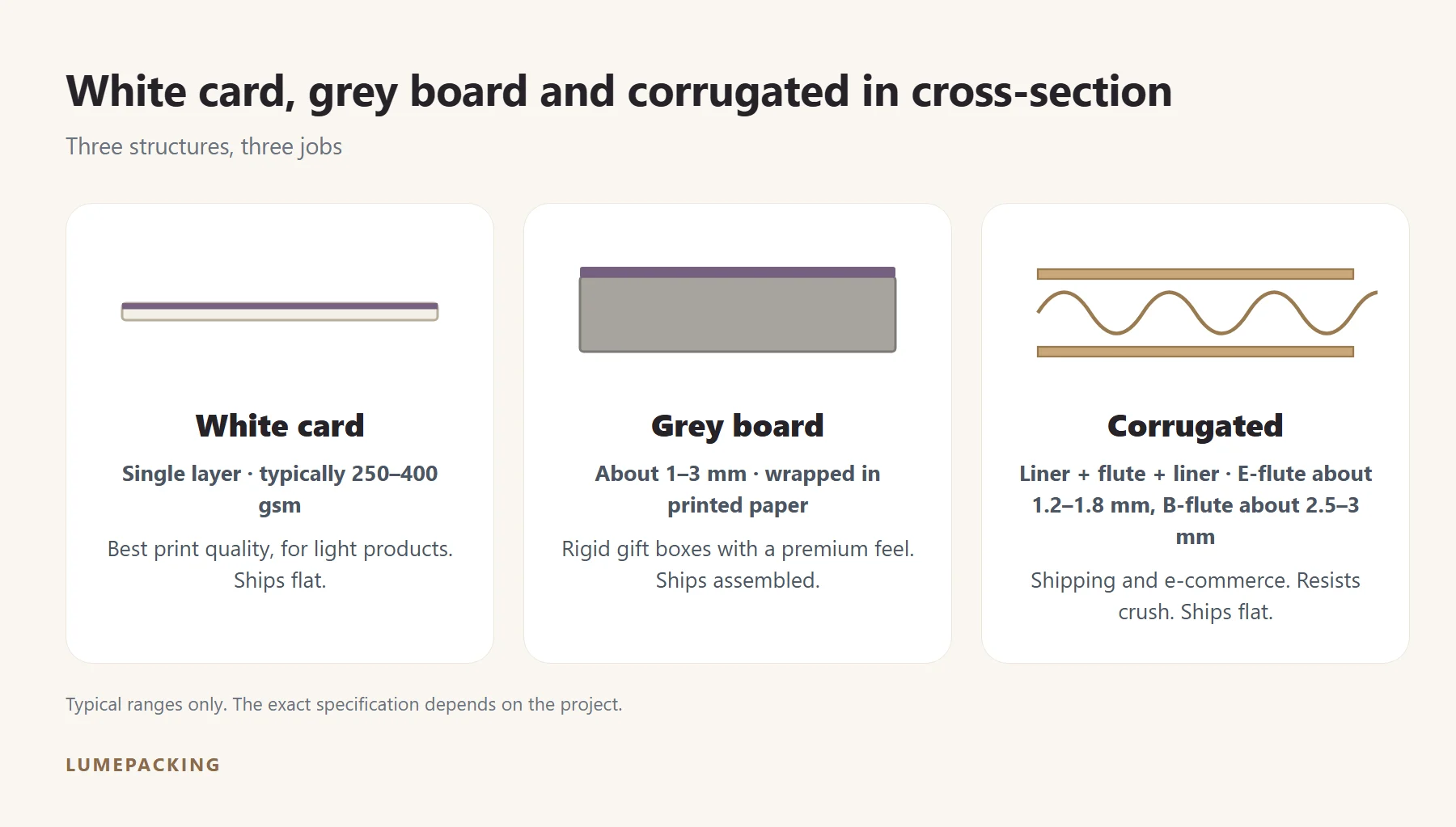
| Typical spec | 250–400 gsm | About 1–3 mm thick | E-flute about 1.2–1.8 mm, B-flute about 2.5–3 mm |
| Strength | Medium, for light products | High, holds its shape | High, resists crush and impact |
| Print quality | Best, fine full colour | Printed on the wrapping paper, any finish possible | Fair, better with a white liner |
| Shipping form | Ships flat, low freight | Ships assembled and bulky, higher freight | Ships flat, crush-resistant |
| Typical use | Apparel, chocolate, eyewear, retail cartons | Gift boxes, jewelry, perfume, skincare sets | E-commerce mailers, shipping cartons, wine boxes |
What is a white card box?
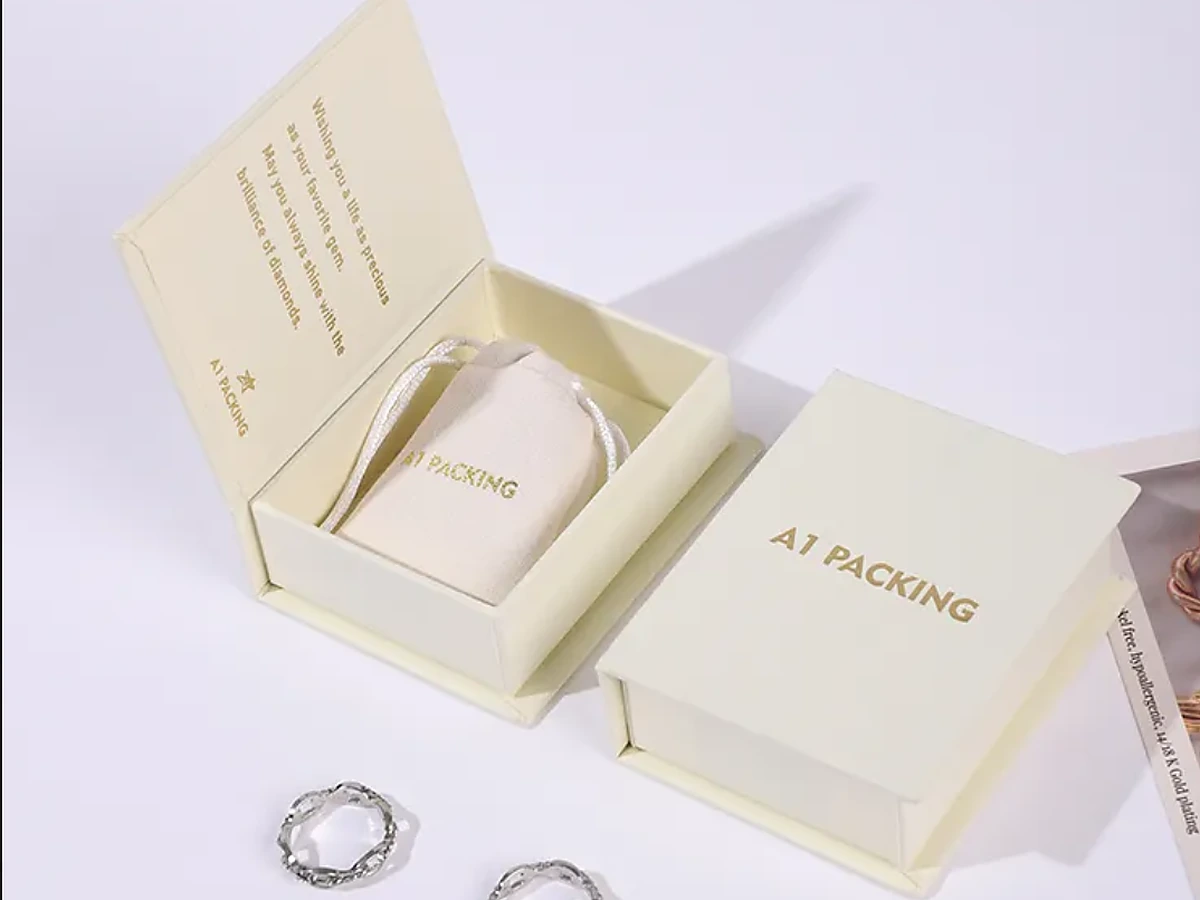
White card is a single-layer board with a coated face, giving the most vivid print and suiting folding cartons. The watercolour marble tuck-flap garment box and several chocolate boxes in our catalogue use 350 gsm white card.
For lighter products that need fine printing, start with white card.
What is a grey board rigid box?
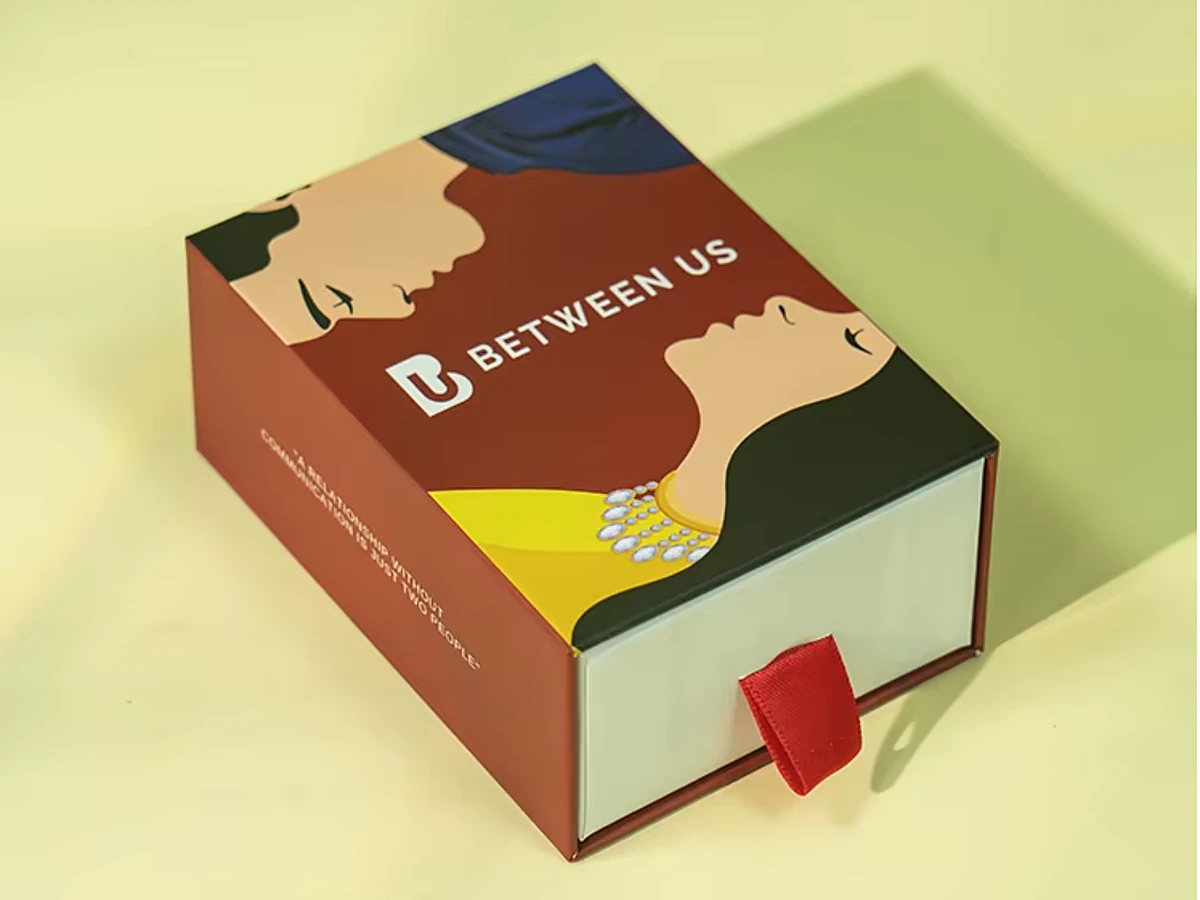
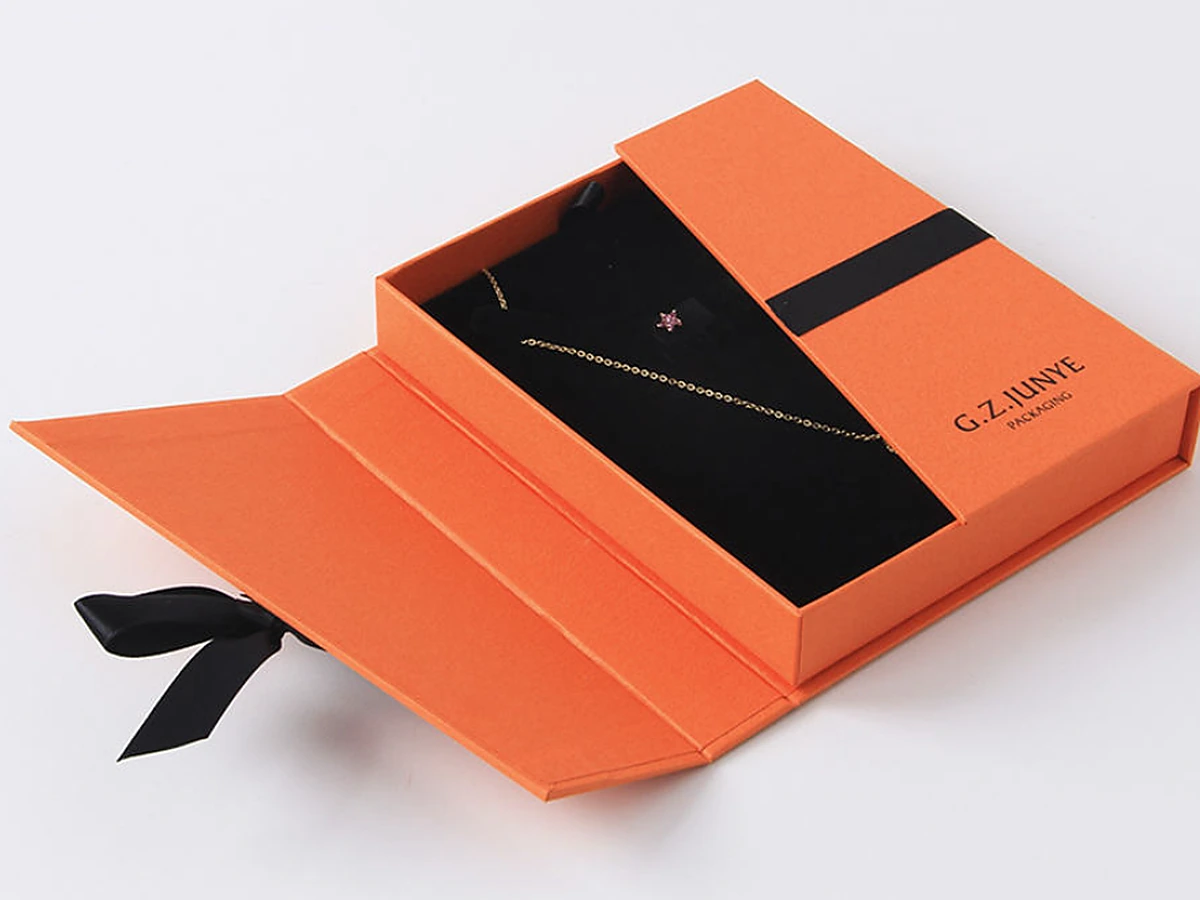
Grey board is a thick, rigid board wrapped in printed or specialty paper to make a rigid box. Rigid boxes in Lumepacking's catalogue mostly use board of 1,000–1,500 gsm and can combine magnets, ribbon and foil finishes.
Grey board boxes are bulky, so include the outer carton in your freight estimate.
What is a corrugated box?
Corrugated is made of liners bonded to a fluted core, so it resists crush and cushions the product. The corrugated cosmetic mailer box and the corrugated e-commerce shipping carton are typical examples.
For anything that ships by parcel, corrugated is usually the first choice.
How do the materials affect cost and environmental requirements?
White card has the lowest unit cost and ships flat; grey board gives the richest feel but costs more; corrugated sits in between and is the strongest. Swapping a grey board rigid box for a white card folding carton, or merging a three-part pack into one corrugated mailer, can cut cost; see packaging cost reduction. All three are paper, but lamination, adhesives and inserts affect the recyclability grade; our PPWR-compliant packaging page explains what to watch.
Before choosing, confirm the product weight, how it ships and the target cost.
How to choose the right material
1. Start from product weight and fragility
Light, non-fragile products suit white card; heavy or fragile ones need corrugated, or grey board with an insert.
2. Confirm the sales channel
Direct-to-consumer e-commerce favours corrugated or an outer carton; retail shelf products that need a premium feel favour white card or grey board.
3. Compare total cost
Add up the box, insert, outer carton and freight, not just the unit price of the box.
How to get started
Send Lumepacking your product dimensions, weight and sales channel, and we will recommend the right material and arrange a sample. Samples are usually ready 3–5 days after confirmation, with an MOQ of 1,000 pieces.